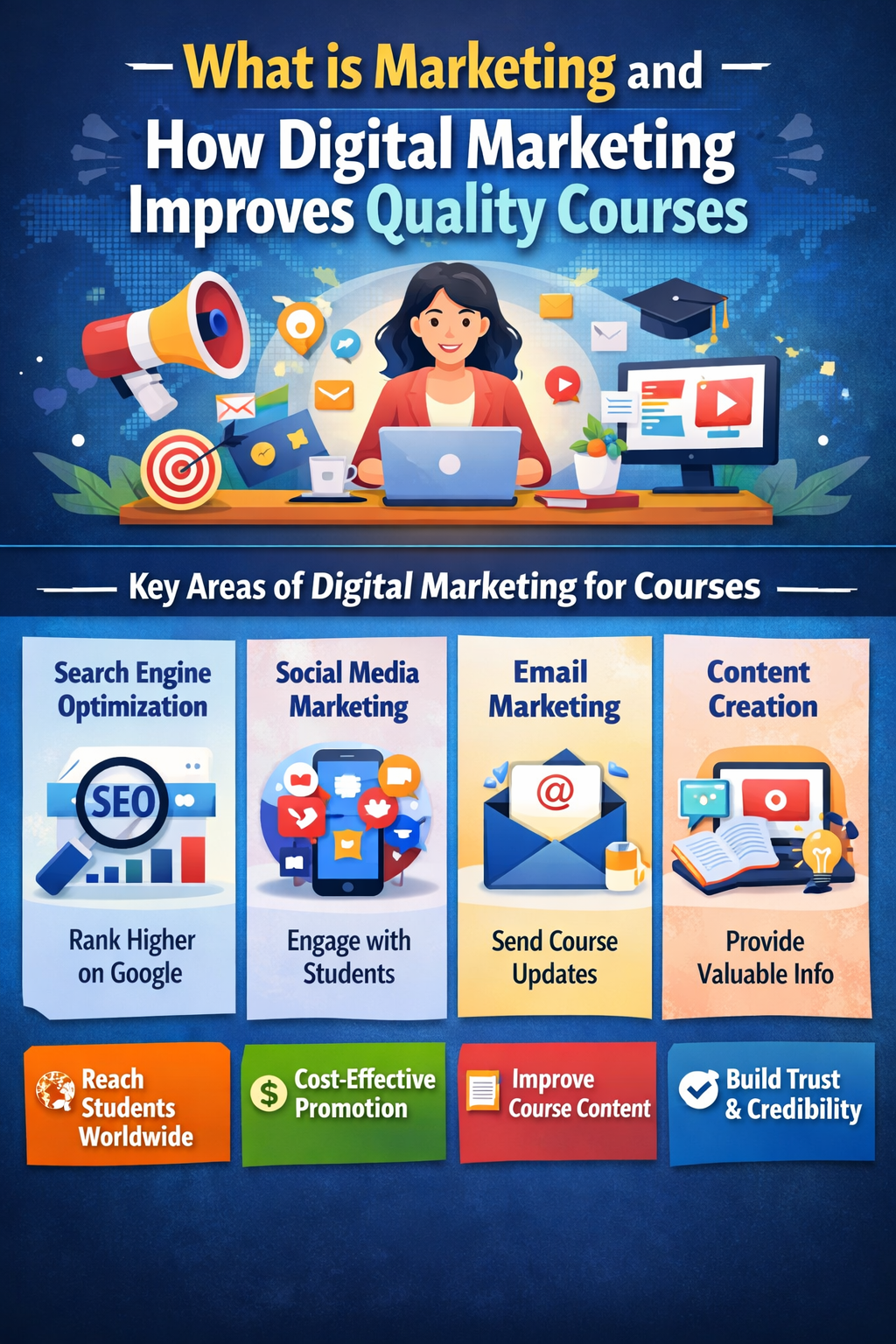
What is Marketing and How Digital Marketing Improves Quality Courses

Introduction

Education has changed a lot in the last 20 years. In earlier times, learning mostly happened in classrooms where students attended lectures, read textbooks, and completed assignments. People had limited options to learn new skills because most education required physical presence in schools or training centers.

Today, the internet has transformed the way people learn. Students can study from their homes using computers or smartphones. Online courses allow learners to gain knowledge from anywhere in the world. Many professionals also use online learning to upgrade their skills and improve their careers.

One of the biggest reasons behind the growth of online education is digital marketing. Digital marketing helps course creators promote their courses to the right audience and connect with students who want to learn new skills.

However, before understanding digital marketing, it is important to understand the concept of marketing itself. Marketing is the foundation of promoting any product, service, or course. Digital marketing is simply a modern version of marketing that uses online tools and platforms.

This article explains what marketing is, what digital marketing means, and how digital marketing helps improve the quality of courses in simple and easy language.

What is Marketing?

Marketing is the process of promoting and selling products or services to customers. It involves understanding customer needs, creating valuable products, and communicating their benefits to the right audience.

In simple words, marketing means connecting a product or service with people who need it.

Marketing includes several activities such as:

  • Identifying customer needs
  • Creating useful products or services
  • Promoting those products
  • Building relationships with customers
  • Encouraging customers to purchase or use the product

For example, if a training institute creates a new computer course, marketing helps them inform students about the course and explain why it is useful.

Marketing is not only about selling. It is also about providing value to customers and building trust over time.

Objectives of Marketing

Marketing has several important goals that help businesses and educational institutions succeed.

  1. Creating Awareness

The first goal of marketing is to make people aware of a product, service, or course. If people do not know about something, they cannot use it.


  1. Attracting Customers

    Marketing helps attract potential customers by explaining how a product or course can solve their problems.

  2. Building Trust


Good marketing builds trust between the provider and the customer. Trust encourages people to choose a particular brand or course.

  1. Increasing Sales

Marketing helps businesses increase sales by reaching the right audience and convincing them about the value of the product.

  1. Building Long-Term Relationships

Marketing also focuses on building long-term relationships with customers by providing good experiences and support.


Traditional Marketing vs Digital Marketing

                             Marketing methods have changed with the development of technology.

Traditional Marketing

Traditional marketing includes methods that existed before the internet became popular. These methods include:
• Newspaper advertisements
• Television commercials
• Radio promotions
• Posters and banners
• Flyers and brochures
These methods can reach many people, but they are often expensive and difficult to measure.

Digital Marketing

Digital marketing is the promotion of products or services using digital technologies and the internet.


It includes activities done through:
• Websites
• Social media platforms
• Search engines
• Emails
• Online advertisements
Digital marketing allows businesses and educators to communicate with people directly and measure the results of their marketing efforts.
________________________________________

What is Digital Marketing?

Digital marketing refers to promoting products, services, or information through digital platforms and the internet.

In simple words, digital marketing means using online tools to reach people and share valuable information with them.

Examples of digital marketing include:

  • Advertising a course on Facebook
  • Sharing educational videos on YouTube
  • Posting course updates on Instagram
  • Writing professional articles on LinkedIn

Digital marketing helps course creators reach thousands of students quickly and effectively.

Importance of Digital Marketing in Education

Digital marketing has become very important for the education industry. Many teachers, institutions, and training companies now use online platforms to promote their courses.

Without digital marketing, many valuable courses may remain hidden from students who need them.

Digital marketing helps education providers:

  • Promote courses to a wider audience
  • Provide useful learning content
  • Build credibility and trust
  • Connect with students directly
  • Improve the overall learning experience

Because of these advantages, digital marketing is now a key part of modern education.

Why Quality Courses Need Digital Marketing

A high-quality course includes useful content, experienced instructors, and practical learning materials. However, even the best course needs proper promotion so that students can find it.
Digital marketing helps quality courses reach the right learners and create a positive reputation.
Some important reasons why digital marketing is necessary for courses include:

Reaching the Right Audience
Digital marketing allows course creators to reach people who are interested in specific topics or skills.
Building Credibility
Online reviews, testimonials, and educational content help build trust among students.
Standing Out from Competitors
There are many courses available online. Digital marketing helps highlight the unique features of a course.
Creating Long-Term Relationships
Through emails and social media, course providers can stay connected with students even after course completion.

Key Digital Marketing Strategies for Quality Courses

Digital marketing uses several strategies to promote and improve courses.

1. Search Engine Optimization (SEO)

Search Engine Optimization helps a website appear higher in search results.

When someone searches for “best online marketing course,” the courses that appear at the top usually use good SEO strategies.

SEO includes:

  • Using relevant keywords
  • Writing helpful blog articles
  • Improving website speed
  • Making websites mobile-friendly

SEO helps students find courses easily.

Social media platforms are powerful tools for promoting courses and building communities.

Course creators use social media to share:

  • Educational videos
  • Learning tips
  • Student success stories
  • Live training sessions

Social media helps create engagement and trust among learners.

2. Social Media Marketing

3. Email Marketing

Email marketing involves sending messages to people who are interested in learning more about a course.

Emails may include:

  • Course updates
  • Free learning resources
  • Webinar invitations
  • Discount offers

Email marketing helps keep students connected and engaged.

4. Content Marketing

Content marketing focuses on creating useful information that attracts learners.

Examples include:

  • Blog articles
  • Tutorial videos
  • Podcasts
  • E-books

For example, if someone runs a digital marketing course, they may write articles about marketing tips or industry trends.

Content marketing builds authority and shows that the course provider has real expertise.

5. Paid Advertising

Paid advertising allows course creators to promote their courses to targeted audiences.

Online advertisements may appear on search engines or social media platforms.

Paid ads are useful for reaching large audiences quickly and increasing course enrollments.

How Digital Marketing Improves Course Quality

Digital marketing does not only promote courses. It also helps improve their quality.

Understanding Student Needs

Digital marketing tools help educators analyze what students are searching for online. This helps instructors design courses that match real learning needs.

Collecting Feedback

Online reviews, comments, and surveys help course creators understand student experiences and improve the course content.

Updating Course Content

Digital marketing encourages continuous improvement. Course creators regularly update lessons based on industry trends.

Providing Extra Learning Materials

Blog posts, videos, and webinars provide additional learning resources that support the main course.

Using Data and Analytics

Digital platforms provide useful data such as:

  • Number of website visitors
  • Student engagement levels
  • Popular lessons

This data helps educators improve the course structure and teaching methods.

Benefits of Digital Marketing for Course Creators

Digital marketing offers several benefits to educators and course providers.

Global Reach

Courses can reach students around the world.

Lower Marketing Cost

Online promotion is often cheaper than traditional advertising.

Better Student Engagement

Students can interact with instructors through comments, messages, and live sessions.

Strong Personal Branding

Course creators can build a strong online reputation through regular content and communication.

Challenges of Digital Marketing for Courses

Although digital marketing offers many advantages, it also has challenges.

High Competition

Many online courses compete for attention.

Algorithm Changes

Search engines and social media platforms frequently update their algorithms.

Trust Issues

Some students hesitate to pay for online courses due to concerns about quality.

Content Overload

Too much information online can confuse students when choosing a course.

These challenges require clear strategies and continuous improvement.

Future of Digital Marketing in Education

The future of education is strongly connected with digital technology.

New technologies such as artificial intelligence, automation, and data analytics will help educators understand student needs better.

Virtual learning environments and interactive technologies may also improve online education experiences.

Digital marketing will continue to play a major role in helping educators reach learners and improve course quality.

Conclusion

Marketing is the process of promoting products or services and connecting them with people who need them. Digital marketing is the modern form of marketing that uses the internet and digital platforms.

In education, digital marketing helps course creators promote their courses, reach students worldwide, and build strong relationships with learners.

More importantly, digital marketing helps improve course quality by collecting feedback, analyzing student behavior, and continuously updating learning materials.

In simple terms, a great course combined with effective digital marketing can create powerful learning opportunities for students everywhere.

Digital marketing not only promotes education but also helps make learning more accessible, engaging, and effective for people around the world.